Couples Therapy in Houston
If every conversation turns into the same fight... if one of you shuts down while the other pursues... if you still love each other but can't seem to find your way back... you're not broken. You're caught in a pattern.
At Rooted Therapy, we help couples rebuild trust, improve communication, and reconnect using Emotionally Focused Therapy (EFT), the Gottman Method, attachment-based therapy, and other evidence-based approaches that help relationships heal at the root.
✓ In-person in Houston (Montrose)
✓ Virtual throughout Texas
✓ Free 15-minute consultation
Could couples therapy help us?
Maybe you keep having the same argument, even when you both promise to handle it differently next time. Maybe one of you pushes for a conversation while the other shuts down. Maybe trust was damaged, or you’ve started to feel more like roommates than partners.
Couples come to therapy for all kinds of reasons, including:
Conflict that keeps circling back to the same issues
Feeling unheard, defensive, or shut out
A loss of trust after betrayal or dishonesty
Parenting stress or major life changes
Differences in intimacy, identity, or desire
Uncertainty about whether to stay together
You don’t have to agree on every detail (or have the whole relationship figured out) to start a conversation with a therapist.

What couples therapy looks like at Rooted
We’re not here to decide who’s right or keep score. We’ll help you slow down the moments that keep going badly and understand what each of you is trying to communicate, protect, or get from the other.
That might mean looking at the argument itself. It might also mean noticing what happens just before one of you gets defensive or checks out. The goal is to make room for a more honest conversation and figure out what you want to change together.
In the first sessions, your therapist will get to know each of you and what’s been happening in the relationship. You’ll talk about what brought you in, what you want help with, and what a useful next step might look like. You don’t need to show up with the perfect explanation.
Meet our couples therapists
-

Michelle Saltzer
MA, LPC-Associate
WHO SHE WORKS WITH
Works with adults and couples who overthink, people-please, avoid conflict, and struggle to say what they need, especially in their closest relationships.
FOCUS AREAS
Anxiety
People-Pleasing
Self-Criticism
Relationships
Fertility, Perinatal & Postpartum
Couples Therapy -

Sana Maaz
MA, LMFT-Associate
WHO SHE WORKS WITH
Works with adults and couples feeling lost, disconnected, or unsure of who they are anymore, especially in the aftermath of trauma, anxiety, or major life change.
FOCUS AREAS
Trauma & Attachment
Anxiety
Couples & Relationship Patterns
Cultural Identity
Life Transitions
Self-Discovery & Identity Shifts -

Alyssa Garcia
MS, LPC-Associate, Bilingual English/Spanish
WHO SHE WORKS WITH
Works with adults and couples navigating grief, relationship changes, and the tension between family or cultural expectations and figuring out what feels true to them.
FOCUS AREAS
Grief & Loss
Trauma & EMDR
Family, Culture & Belonging
Relationships & Attachment
Life Transitions & Identity -

Lauren Bigelow
LMSW
WHO SHE WORKS WITH
Works with adults and couples navigating burnout, grief, neurodivergence, chronic illness, and the exhaustion of being the person everyone else relies on.
FOCUS AREAS
Neurodivergence
Chronic Illness
Grief & Loss
Burnout & Caregiver Fatigue
Anxiety & Perfectionism
Perimenopause -
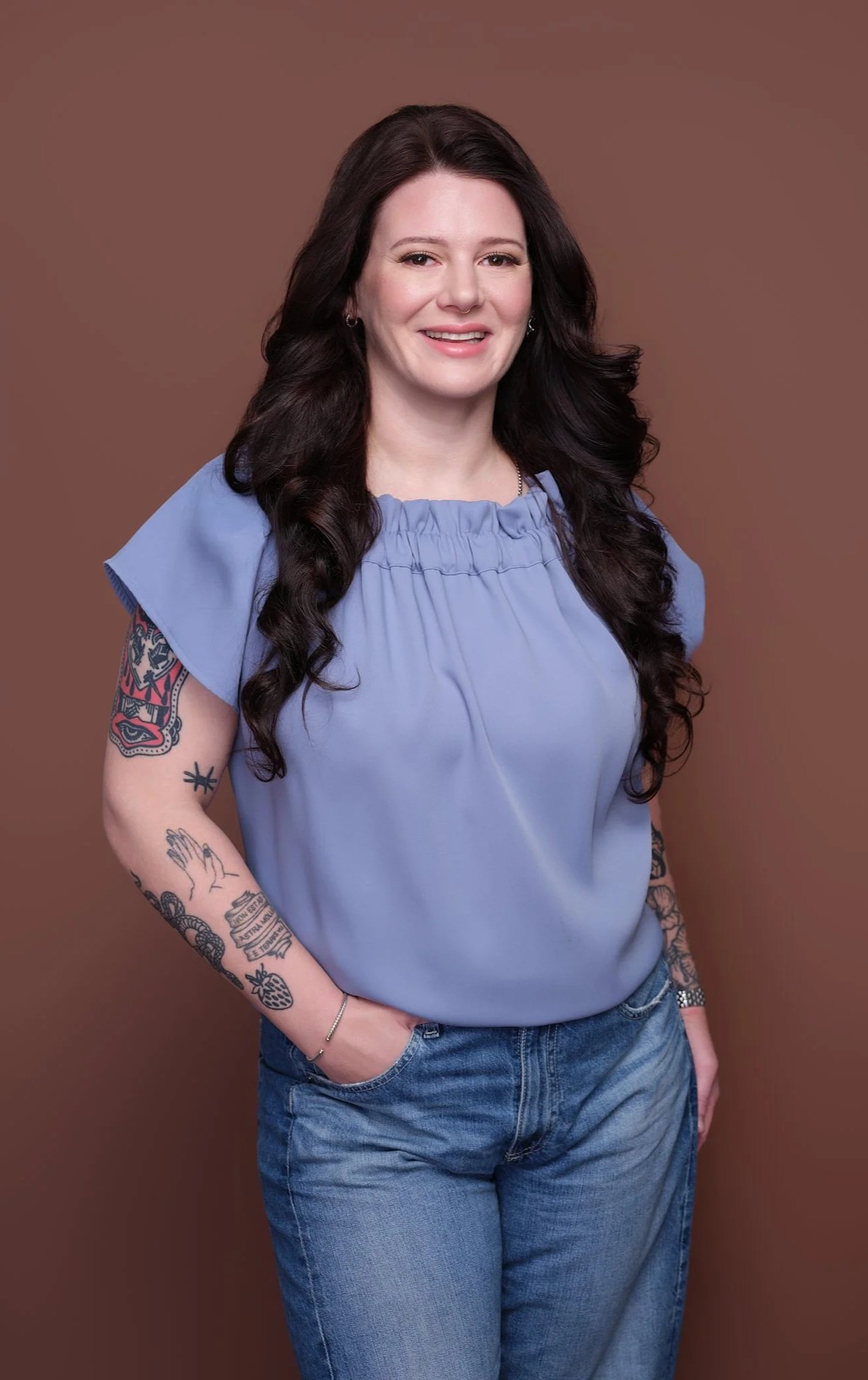
Chloe Espenan
LMSW
WHO SHE WORKS WITH
Works with adults, couples, and teens (13+) navigating depression, codependency, substance use, complicated relationships with food, and coping patterns that aren’t working anymore.
FOCUS AREAS
Depression
Codependency
Substance Use & Process Addictions
Disordered Eating Patterns
Anxiety & Self-Criticism -

Haley Macek
MS, LPC-Associate
WHO SHE WORKS WITH
Works with adults, teens (13+), and couples who feel disconnected from themselves, stuck in painful relationships, or exhausted from trying to be who everyone expects them to be.
FOCUS AREAS
Anxiety & Depression
Trauma
Relationships & Attachment
LGBTQIA+ Identity & Belonging
Support After Sexual or Domestic Violence
How we work
Our couples therapists draw from approaches such as Emotionally Focused Therapy (EFT), Gottman-informed therapy, attachment-based therapy, and trauma-informed care. The approach depends on the people in the room and what you’re hoping to work on.
When past experiences are affecting how safe or connected you feel with your partner, your therapist may also discuss whether individual trauma work, including EMDR, could be helpful.
-
The Gottman Method is based on decades of relationship research and offers practical tools for improving communication, navigating conflict, and strengthening friendship within your relationship. Rather than trying to eliminate disagreements, it helps couples learn how to move through them in healthier, more connected ways.
-
Emotionally Focused Therapy (EFT) helps couples understand the emotional patterns driving conflict instead of getting stuck arguing about the surface issue. By strengthening emotional safety and helping each partner feel seen and understood, EFT can help rebuild trust, closeness, and connection.
-
The way we learned to connect in childhood often shapes how we show up in adult relationships. Attachment-based therapy helps you understand the fears, protective strategies, and unmet needs that may be keeping you stuck so you can respond to one another with greater understanding instead of reactivity.
-
Sometimes the intensity of conflict isn't really about what's happening today. Past experiences, painful relationships, or unresolved trauma can shape how safe or threatening certain moments feel. A trauma-informed approach helps us understand those deeper influences with curiosity rather than blame.
-
If past experiences continue to affect your relationship, EMDR may be incorporated into treatment when appropriate. By helping the brain process unresolved memories, EMDR can reduce the emotional intensity that fuels certain reactions, making it easier to respond to your partner in the present rather than from old wounds.

Relationship therapy for different kinds of relationships
Relationships don’t all look the same, and neither does good therapy. We work with married couples, dating partners, LGBTQIA+ relationships, consensually nonmonogamous and polyamorous relationships, and people navigating other relationship structures.
Our goal isn’t to fit your relationship into someone else’s definition of healthy. It’s to understand what’s happening between you and help you decide what kind of relationship you want to build.
GETTING UNSTUCK, TOGETHERWhy couples choose Rooted Therapy
✓ Emotionally Focused Therapy (EFT)
✓ Gottman-informed couples therapy
✓ Attachment-based approach
✓ LGBTQIA+ affirming
✓ Trauma-informed clinicians
✓ In-person couples therapy in Houston
✓ Virtual therapy anywhere in Texas
✓ Free 15-minute consultation
Start with a free 15-minute consultation
Tell us a little about what’s bringing you in. We’ll help you think through fit and next steps.
Couples therapy FAQs
-
That’s completely normal. Many partners worry about being blamed or “ganged up on.” At Rooted Therapy, we don’t take sides. Instead, we look at the pattern between you. Our goal is to slow things down, create safety, and help each person feel seen and understood at their own pace.
-
No. You can come in feeling uncertain. Tell us what each of you is hoping to figure out during the consultation, and we can talk about whether couples therapy at Rooted seems like a good fit.
-
It happens, and it’s actually okay. Therapy isn’t about staying perfectly calm; it’s about learning what happens when the tension rises and practicing new ways to respond. Your therapist will guide the conversation and help you both find steadier footing when emotions take over.
-
Yes. We move carefully and transparently through those situations. EFT provides a structured way to rebuild trust, process pain, and repair the bond without rushing forgiveness or pretending everything’s fine. We go at a pace that feels safe for both partners.
-
It varies. Many couples begin with weekly sessions, then taper as communication and connection improve. You’ll set goals with your therapist and check in on progress regularly. The process is collaborative, and you stay in the driver’s seat.
-
Yes. We offer secure video sessions across Texas and in-person appointments in our Montrose office (77006). Some couples even do a mix of both depending on their schedules.
-
Couples therapy sessions are $165 per 60-minute session. Some of our therapists offer longer sessions (90 minutes) for $225. We are a private-pay practice and do not accept insurance directly.
That said, many clients choose to use their out-of-network benefits. We partner with Mentaya, a benefits verification service, to help you quickly check whether your plan offers reimbursement and what that might look like financially, you can check whether you have out-of-network coverage instantly here.
If cost feels like a barrier, we’re happy to talk through options during a consultation so you can make an informed, pressure-free decision.
-
Sana Maaz, Lauren Bigelow, Michelle Saltzer, Haley Macek, Alyssa Garcia, and Chloe Espenan provide couples therapy. Each brings an attachment-focused, relational approach, and we’ll help match you with the clinician who best fits what you’re hoping to work on.
Lauren Palmer does not work with couples at this time.